Tuesday, April 21, 2020

Something to Look At

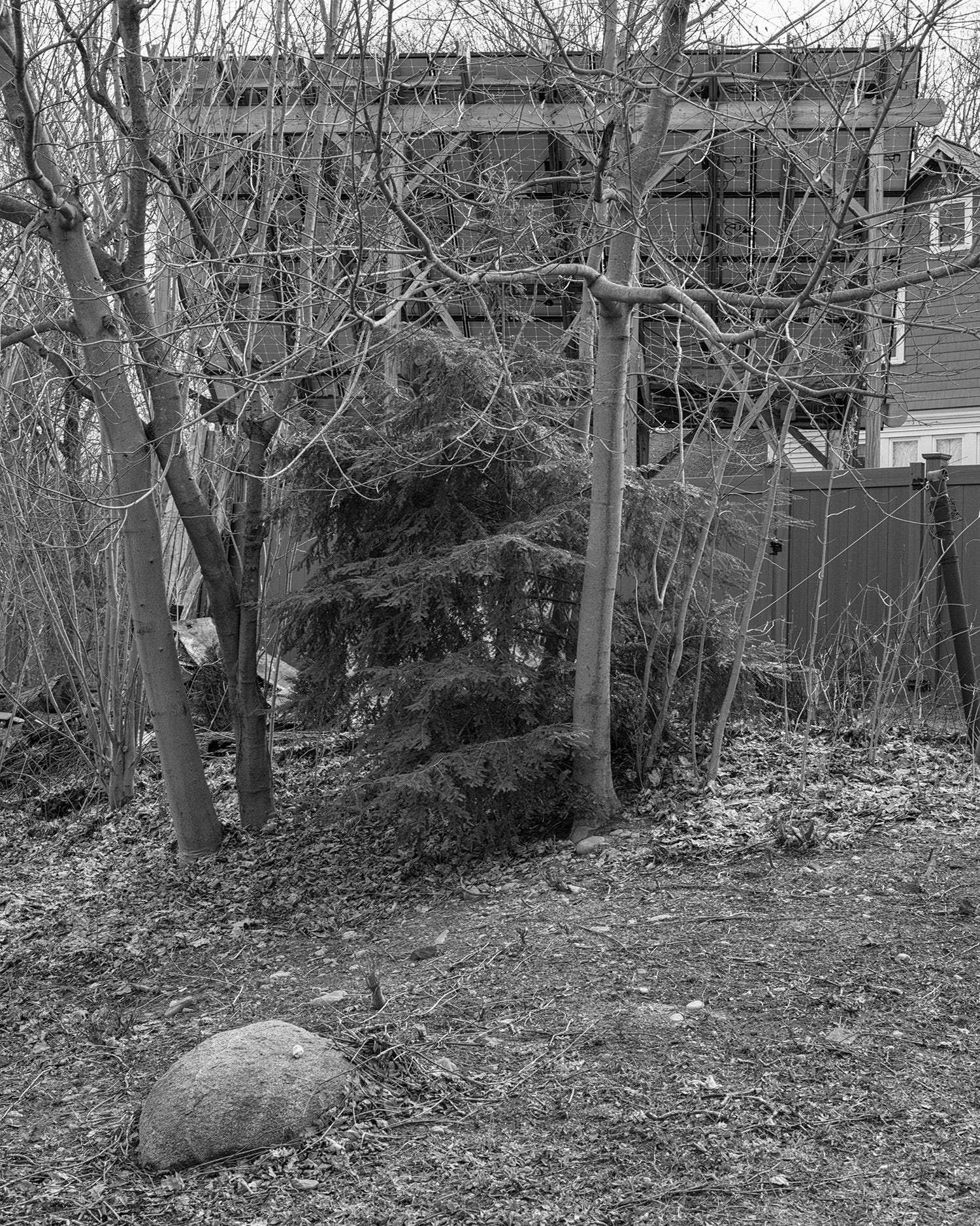
Jörg has a newsletter, but you don't have to subscribe. You can just read it here. It's not very exciting, but you might find something in it you like. Perusing his latest, I came across this picture:


(note that I did not download this, I am simply linking directly in to substack's publicly accessible copy of the picture, so fie on thee and thy DMCA takedown notices).

Anyways, he remarks: I knew this would be a good picture the moment I saw the scene.

Now, I am long on the record as being open-minded on the subject of what "good" might mean. I think any picture can be good if you give it the right home, and I also wrote about this guy: Vernacular Enigma. So, I am the guy who is definitely willing to go to the mat and try really hard to see what makes a picture worth looking at, worth taking.

Quick now, before I start ranting, I will acknowledge that I think the question of what makes a photo good is a ferociously complicated and difficult question. I am very loathe to declare a photograph not-good, and my judgements are always conditional well, look, if you put it in the right context, maybe? The quality of being good is not entirely or even mostly inside the frame. But, if you're gonna declare your picture good as a stand-alone object...

I just don't see it. We're not in the land of Jörg's vague the pictures in the book are, of course, excellent where you wonder maybe if he means this one, or that one. We're up against it. He's baldly asserting that this specific picture is a good picture.

So, uh, christ. Let's try to figure out what on earth he might be seeing here, I guess?

He's smashed the midtones into a flat goo, so it looks like all those other Germans, or, I suppose, maybe the light really was that flat? Whether he did it in post, or whether it looked like that, it's clearly part of the look he feels is good. Maybe it's a clinical thing, or a refusal to lean on the conventions, or a refusal of cheap drama.

I mean, whatever the rationalization, it's definitely an aethetic, they all do it. There's a reason, even if we don't know it. It is, as the kids say, a thing.

Formally, there's some structure. There's the rock in the foreground, a flat area of ground, a contrasting welter of tangled branches above that, and obscured behind the branches a oddly geometrical building with a sort of weird grid structure that both defies and echoes the tangle. There's the strong cross shape of horizontal branch across tree, which could either read as a reference to The Cross, or is just another echo of the grids on the building behind.

There's the blob of evergreen thing in the middle which, uh, fuck, I have no idea, but I could probably make up some formal bullshit about what it echos or balances, and there's some other shit around the edge.

So there's some sort of chaotic formal structure, I guess, all revealed in this sort of HDR-lite clinical detail, more like a blueprint than a photograph. Ok, I guess.

But ultimately who gives a shit? It's a clinical precision blueprint of some random crap.

How, really, is it different from these flat messes I shot with my phone while puzzling over this?


These things also have formal structure and a wilfully unappealing flatness, although I must admit I did not wait for a cloudy day and it was evening, so there's still a bit of drama that I could not drain out.

I'm certainly not claiming that someone ought to give me an MFA for these pictures. Indeed, I would probably attack anyone who attempted it.

But... what the hell is Jörg seeing in his picture that causes him to judge it a good picture? What, in particular, distinguishes it in his mind, as it surely must be distinguished, from any other potential picture of random shit taken on a cloudy day and murdered in Photoshop?

Why point the camera there with such satisfaction and not just, well, anywhere?

If we unwind time a bit, maybe we can trace this sort of thing back to the Bechers. The Düsseldorf school is certainly all over this kind of austere fuck-you look to their pictures, and often they seem to lean toward pictures of nothing.

The Bechers could absolutely answer the question of why point the camera that way instead of anywhere else? The answer was because there's a mine headframe there, and there isn't one in any of the other directions. It was not a complex algorithm, but one could make sense of it.

The result was, as we all know, a whole bunch of these austere, clinical, photos of mine headframes. Another year it would be grain elevators, and so on.

The same fuck-you aesthetic, more or less (they were not so allergic to blacks and whites, but the same sense is there), the same bland nothing subjects. The same sense that the viewer is being willfully cast adrift in a small boat to make their own way to land. With the Bechers, though, there was land to be found. The point is actually pretty obvious. Mine headframes are cool, they are interesting. It is interesting that they all look the same, and yet differ. They are interesting and in a way beautiful on their own.

Once one begins actually paddling, the land is not even hard to find.

It might be worth noting that the Bechers did series, not singletons. A single mine headframe, though more interesting that much of what we see from Mr. Colberg, would not be likely to make the point. 16 of them in a grid begins to make sense, though. Gursky doesn't do series, at least not famously, but sometimes he can make some sense even with his own take on much the same clinical aesthetic, but that's because he's very political and blunt. He's trying to make a point, rather than trying to avoid making a point.

With the others in the same vein, whether actually Düsseldorf or no, I don't feel like there's actually any land. It feels as if the artist has managed the aesthetic, and the pose of clinical detachment, has mastered the fuck-you, and the thrusting of viewers in to small boats, but has missed the point that there's supposed to be some land somewhere. Indeed, they seem to have developed the idea that there isn't supposed to be land. The viewer is supposed to, I guess, find something in the boat.

But if the point is to find something in the boat, if there is no land, then again, why this picture instead of that one? Why not point the camera any damn place? What makes this picture good?

Putting these things into books does not seem to help much. It's just bafflement on bafflement, although sometimes you do get a hint of boy, I hate Berlin.

Jörg seems to feel that there is some land someplace, but I am damned if I can find it, and I've been paddling this boat a while now.

Sunday, April 19, 2020

Henri-Carteir Bresson is NOT a Street Photographer!

I know, I know, everyone thinks Henri-Cartier was the greatest street tog. But he was not even a street photographer!

Is there any evidence, ever, that he argued with anyone about what real street is? No. I looked. There isn't any. He never argued with anyone about what true street was. I don't think he even called his photos street! He didn't even know the term "decisive moment!" and used some weird nonsense word instead: ala sauvette whatever that means. Is it like horse douvre?

In fact he doesn't even seem to be in any forums or on social media. I didn't check every forum of course but I hit all the big ones, and he's not there. How can you argue about street unless you're in a forum?

Obviously if he's not in any forums or on social, he also can't have called anyone out for not shooting real street.

The other thing I checked for was collectives. Every real street tog belongs to at least one street collective, and he doesn't belong to any.

The only group he seems to belong to is some sort of gun club.

All he ever seems to so is to take pictures.

Time for us to stop worshipping Mr. Bresson! He isn't all that!


(Doesn't anyone like my "gun club" joke?)

Saturday, April 18, 2020

Tools of the Trade

Academic Art, as I have noted in the past, is explicitly made to be opaque to outsiders. Students are urged to be dig deeper, to create new ways of expression. The results read, and are intended to read, as inscrutable. These are experiments in expression.

James Joyce wrote a, um, celebrated thing called Finnegan's Wake. It is universally known, and almost universally unread, on account of the difficulty involved in reading it. This thing was an experiment, and kind of an interesting one, I guess. I certainly have not read it. I have read Faulkner's The Sound and the Fury in which every 4th chapter or so is written in a similarly, uh, difficult style. It was No Fun At All.

This category of experiment, the nonsense/stream of consciousness style, popped up every now and then for a while. While individual works are celebrated, it has not been successful in the sense that it has been widely adopted, at least not in toto. Similarly people experiment with lipogrammatic novels, La Disparition for example, in which you write without the use of some particular letter of the alphabet, and again, these ideas may or may not be successful in single cases but are never widely adopted. And on it goes. I dare say one could develop quite a list of similarly failed and semi-failed experiments.

Indeed, people write novels today using more or less the same toolkit that Dickens used, the same tools 7th graders use to write book reports, the same tools middle managers use to write memos. Sentences with structures one can diagram, that follow more or less from one another, and so on. Certainly the memo writer tends to use fewer allegories and a different vocabulary than does the novelist, but they two things are recognizably the same thing in ways that Finnegan's Wake recognizably is something else.

This is not to suggest that we ought not favor experimentation. Not every idea is going to work out. Indeed, most of them will founder. A few will work out. I dare say there was a time when the framing devices we now take as standard in novels would have been frowned upon. Does the flashback fall in and out of fashion? What about unreliable narrators (the most irritating of tics, but common), and inner monologues?

Can we see the bootprints of Joyce or Perec in contemporary novels? Maybe? I suppose there must be at least few writers at least who are both publishable and sufficiently fannish to work a little of their hero's methods in here and there, and I dare say it enriches the literature. I guess, for instance, you can draw a line from Joyce to Kerouac to the present time.

Could you, in 1900 or 1940 or 1960 have guessed which of "stream of consciousness" and "lipogram" would enter the standard toolbox? In hindsight it appears obvious that lipgram was not going to make the cut, but probably at times stream of consciousness looked just as ridiculous as lipograms and nonsense.

I suppose every MFA candidate who's taking pictures of his feet with a pinhole camera for his book Racism is Very Bad hopes to be inventing something akin to the unreliable narrator, with a backup plan of being Joyce in a pinch. In reality, though, most of them are just the long-forgotten author who thought "what if I write the book backwards with every third letter reversed" and who never found a publisher.

Not sure how I feel about this. On the one hand, innovation is a good thing. On the other hand, we seem to be sacrificing an awful lot of lambs for not much useful output.

Where is the line between laboratory and scam?

And, perhaps more important, who really needs to care? Most novels, still, are written using Dickens's toolbox, which seems to be adequate to the task. The novel is not, after all, the tools. One does not actually need a new mode of expression to express a new idea.

Friday, April 17, 2020

Baggage

I have spent a lot of time over the years grumbling about how carefully photographers teach one another not to see. They learn to distract themselves with trivia like leading lines and rules of thirds. They examine sharpness and white balance, lighting, poses, and so on. This, I have argued and continue to believe, often prevents would-be photographers from actually seeing much of the photo.

Rudolf Arnheim talks about a lot of experiments (and there are a lot of them) in which people are repeatedly shows very simple scenes in many variations, with their impressions being recorded and charted and studied.

The point is that we all bring a lot of baggage with us when we're looking at pictures. The experiments Arnheim surveys are largely concerned with how we see when the baggage is set aside — they use a lot of abstract shapes, lines, and so on. The scenes are simplified to the point of absurdity, arguably for no reason except to clear away the clutter.

Amateur photographers of the particularly earnest technical stripe on the other hand bring a lot of very specialized baggage with them.

The average mook looking at a pictures brings their own baggage. While they may not bring a bunch of "rules of composition" nonsense with them, they might well bring some pretty personal stuff with them. They will also bring a sort of standard kit of baggage, that everyone in their cultural milieu carries around.

A picture of Kim Kardashian is likely to have some pretty dynamic curves in it, and if it's well done there will be some things about the fall of light on rounded objects and whatnot. Stuff Arnheim could tell you about.

It will also be a picture of a voluptuous woman, likely one who is holding herself in a way to emphasize that voluptuousness because, Kim. There's a whole slew of material the average, say, westerner is going to bring to a picture of a voluptuous woman.

Finally, it's a picture of Kim, who is locked eternally in a social media battle with Taylor Swift, and getting her ass handed to her. Many westerners (and not a few non-westerners) will have some sort of like/dislike reaction to Kim, she's a polarizing cultural figure.

I have, of late, been interested in what we might as well call pure seeing, that kind of stuff Arnheim talks about. That baggage-free seeing. I think I have some little facility with it, and I certainly try to do it when I look at pictures as well as, sometimes, the world. It seems to me that, surely, it is the basis of it all. These are the human universals, right? These are the things we can rely on, regardless of which set of baggage a viewer is dragging with them.

At the same time, I wonder if it matters.

Does pure seeing inform the way we take in the voluptuous woman's form, and does that in turn inform the way we take in the photograph of Ms. Kardashian? Or, alternatively, does our affection for the subject simply obliterate all the other stuff, and we see only Kim-the-celebrity?

I don't have an answer here beyond maybe? maybe both-and? It certainly encourages me in the direction of subjects to which less baggage adheres. Maybe I can make something out of flowers after all.

Wednesday, April 15, 2020

Where are all the portraits?

I just had a thought the other night.

You know how Dorothea Lange and Edward Weston, and loads of other Famous Photographers started out/supported themselves by running commercial portraiture operations?

Where the hell are all those portraits? I mean, we see portraits, but only the ones from their artistic ventures, never the grind-em-out commercial work. I cannot recall ever seeing any such thing, nor any collections of them, nor any shows containing these objects. Surely there must be a bunch of these things out there, and surely someone has (could? might?) collect some of them together.

Where the hell are all the portraits?

Tuesday, April 14, 2020

The Great Men of Photography

The so-called "Great Man Theory" is really an approach to writing history as a series of biographies. History is seen as, essentially, a series of accomplishments of particularly potent individuals. WWII is the struggle between Hitler and Churchill.

This theory is not particularly well respected in these modern times, although the layman continues to conceive of history in this way. A modern interpretation of WWII (I am not a scholar) might explain it as the inevitable consequence of vast cultural and economic forces. It would have occurred without any of the great men. Had they all died at birth other figures would have been thrust forward to play those roles. The details of the event would have changed, but the overall shape of the thing would have evolved in largely the same way.

I have argued in the past that the "invention" of photography occurred in much this way. Niépce, Daguerre, and Talbot are usually trotted out as the inventors of photography, with varying degrees of implication that "but for these men..." In reality, as is obvious to anyone who looks, the knowledge and the will had simply coalesced in western Europe at that time, and the invention of photography in some form was inevitable. The details would have varied, as the parallel development in England and France illustrate, but the end result would almost certainly have ended up more or less exactly here.

At this point allow me to divert your attention to a recent Colberg piece, on Stephen Shore's latest book (from MACK, naturlich, Jörg being apparently their in-house reviewer now.)

In it he draws a somewhat outré parallel between Shore, Strand, and Moholy-Nagy. I think I get it, though. He seems to be making the point that each of these three men represent a departure from earlier "photographic seeing" (by which he means "photography") and that each is thus some sort of a pivotal figure. A "great man" in the classic historiographic sense. He's not wrong, here, except in how he relates the narrative.

It is indeed traditional in Photo History to use the Great Man approach, because Photo History is written by amateurs who don't know any better.

Photography is such a chaotic mass of influence and borrowing, it is so easy to steal a method, a look, an aesthetic, that the Great Man approach is guaranteed to be wrong.

In reality, these things are always happening in a morass of cross-influence. Strand, Moholo-Nagy, and Shore (as well as everyone else) were simply artists plucked from the flowing stream. The people doing the plucking (the curators, critics, and so on) tell us that each of these men was seminal, was perhaps the clearest exemplar of the new voice, the new look, the new aesthetic. Was Moholo-Nagy really the shining star of Bauhaus, the one who not only led the way but was also the clearest voice, the most talented of the photographers working there and then? Or did he simply talk faster, schmooze better, and sell himself more effectively? Did he simply choose his friends more carefully?

I don't know, but I do know that Bauhaus wasn't exactly a bunch of yahoos, and I do kinda know how the world works.

Shore's antecedents are at least to a degree obvious and explicit. He grew up, like everyone of his age, surrounded by color snapshots, and his work obviously derives from that. To suppose that he was the only person who made a serious effort to make serious photographs that looked like color snapshots is insane. I know exactly nothing about the Serious Photographic Art in this vein at that time, but it is inconceivable that Shore was alone (and yet the Standard Narrative insists that he was.)

Strand, Moholo-Nagy, and Shore certainly seem to have had ability and clarity of vision, but I think we must allow that in addition they had luck and good PR. We must allow that they do not represent vast revolutionary leaps of aesthetic, of photographic vision. They are, rather, simply good examples of what was going on around them at the time, selected by a somewhat opaque process, and anointed.

None of these players are causal, to suppose that they are is simply ridiculous, but is also the standard narrative. Neither, of course, are they merely swept along by trends outside of their control. Everyone takes part in their own culture, and when one is anointed as a Serious Influence in ones own lifetime, one's influence naturally increases. Each of these photographers certainly was influential, each one bent the course of photography.

Still, if Strand has never picked up a camera, we still would have had Modernism. If Shore had become a banker, color photographs that look like snapshots would have happened anyways. Collage would have been fine without Moholo-Nagy.

Rather than treating Churchill has a prime mover in the Second World War, we see him through the lens of modern historiography as the man who happened to be the leader of Great Britain at that time, and whose actions did shape the conflict to a degree, but always within the confines of the vastly larger forces that caused it, that defined the larger shape of the thing. In the same way, we ought to treat Famous Photographers not as the agents of change, but rather as the most visible objects of change, the victims of change, as it were. They are less the creators of change, and rather more the indicators of it.

It is unfortunate that Moholo-Nagy (and Churchill) left more citable detritus than their contemporaries. Hannah Hoch left us nothing like the 60 Fotos Colberg cites that we can point to as an artifact of that place and time. Churchill, likewise, could not be prevented from writing and writing and writing, and so the bureaucrats who effected the changes demanded by the vast gears of history are forgotten, and Churchill is left to tell us how great he was.

It is curious to see Colberg, who likes nothing more than to rail against the Macho Cult of photography, and to complain about the dominance of Male Gaze in the standard narratives of photographic history, fall into the same patterns. He ought to know better.

He has a platform, of sorts, and he ought to knock off this Victorian way of relating history which is as dated as Pictorialism, and a lot less attractive.

Sunday, April 12, 2020

Happy Easter!

If Easter isn't about boiled eggs covered with shards of metal, I don't know what Easter means.